
RISC-Based ARM processors as the Future of Modern Computing replacing the CISC processors
By Bhuwan Jung Thapa · · Updated 2025-09-05
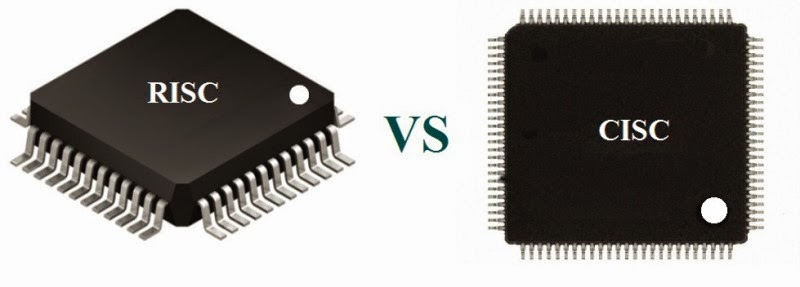
The debate between the RISC and CISC continues, but the evidence shows that RISC-based ARM processors are quickly emerging as the future of computing. While CISC has been dominant for decades due to its power and compatibility, RISC is quickly catching up to the present and the future as a new path forward. Offering high efficiency, lower power consumption, scalability, and growing raw performance that now rivals or even exceeds the CISC in many areas, RISC-based ARM processors are proving themselves as a strong alternative as a new path forward for modern computing.
The Central Processing Unit (CPU), also known as “processor,” is one of the most crucial developments in human history, and its development is still an ongoing process. Following the initial use of the Abacus for early time computing, further technological advancements led to the introduction of a powerful processor capable of performing complex arithmetic operations, significantly outperforming the earlier computing tools. As computing needs grew, to further add complex operations and calculations, the Instruction Set Architecture (ISA) concept was introduced. ISA was an abstract model that defined how the software interacts with the hardware. ISA design specifies a standard set of instructions that a processor can execute. The first widely used ISA design was the Complex Instruction Set Computer (CISC), which relied on a large set of instructions to perform complex computing tasks. CISC processors were very well-suited for large and heavy workloads, but for small tasks, they often performed inefficiently, since many of their instructions were not necessary for the general level of everyday usage [1]. This inefficiency and limitations eventually led researchers to question whether a reduced and simpler set of instructions might be able to deliver better performance with high efficiency. This became the foundation of the Reduced Instruction Set Computer (RISC). This paper argues that RISC-based processors, especially a version known as Advanced RISC Machine (ARM), should replace CISC processors as the main design for modern computing.
Because of these inefficiencies, a new ISA design was idealized and proposed, which consisted of a reduced instruction set and a simpler hardware design compared to the CISC. This new approach was later termed Reduced Instruction Set Computer (RISC). After the initial research and development of RISC, the idea was not widely supported because it seemed to have an incomplete instruction set rather than CISC’s complete instruction set. However, after its experimentation, it showed RISC was capable of running small programs with higher efficiency and lower energy consumption in comparison to CISC, even if they could not handle the same level of complexity at first [2]. In their landmark 1980 paper, Patterson and Ditzel emphasized that many of CISC’s complex instructions were rarely used and that similar pipelines could be more cost-effective [3]. These principles of RISC became the foundation for the development of ARM chips, which were first implemented by early devices as the Acorn Archimedes computer in 1987, showing that RISC-based design processors could be practical in consumer systems [4].
Further, with the increasing development of RISC-based ARM processors in terms of raw power and efficiency, RISC-based processors, especially ARM processors,are showing potential to replace CISC-based processors as the dominant processors in the computing field for modern computing. Though RISC was developed in the early 1980s, it was not immediately used by computational device manufacturers and was only used as an alternative to CISC processors for basic tasks [1]. However, after further research, pipelining was introduced for RISC, and the efficiency was realized as a huge leap forward from the CISC designs [2]. By the early 1990s, ARM-based processors were already inside every mobile phone, and they were mainly used for basic operations. At that time, even though their efficiency was realized to be better than CISC designs, it was still not widely supported and acknowledged as a CISC’s successor [3]. The turning point came in 2007, when Apple introduced its first iPhone with an ARM processor based on RISC design, which was far ahead of other smartphones in terms of performance and efficiency, and established a new standard in the market [5]. Following Apple's success, the majority of smartphones are equipped with ARM processors [1]. In the personal computers field, Intel's and AMD’s X86 and X64 processors were used for all personal computers, which were CISC-based designs. Another turning point for RISC design came in 2020, when Apple’s ARM-based M-series chip surpassed Intel’s and AMD’s in both power and efficiency [5]. Although high-end desktop processors still rely on CISC-based designs, manufacturers are gradually shifting to RISC-based ARM processors for computers after Apple’s success with M-series processors. At present, ARM processors are in a phase of development where they can compete directly with CISC-based processors or even exceed them at raw speed and power efficiency [1].
Despite these advances, CISC processors remain important in modern computing. High-end Intel and AMD x86 CISC-based processors continue to dominate enterprise-level servers, professional workstations, and gaming PCs, where maximum raw computing power is required and is essential [1], which is yet not fully matched by RISC design-based processors. Another major reason is software compatibility. CISC has decades of software developed specifically for them and optimized, making transitions to RISC-based processors difficult. Since RISC is newly introduced, not all software is compatible with RISC processors, which were designed for different ISA designs, i.e., CISC [6]. Scholars have also noted modern microarchitectures blur the differences between RISC and CISC, meaning the modern processor designs use similar techniques to improve performance regardless of the instruction set [1]. These reasons together show why the CISC has maintained its dominance in certain areas even as ARM continues to advance.
Still, these challenges faced by ARM are slowly being addressed, as the industry continues to move toward RISC-based processors. Apple has introduced its own custom Rosetta Framework (a software-based solution), with which x86 applications can run smoothly in ARM-based M-series Macs, making the transitions for users simpler, and allowing time for companies and their developers to produce new versions of software supporting the new generation of processors[5]. At the same time, major application software companies are already developing a compatible version of their software for ARM processors, whereas new software companies are directly starting with ARM-based silicon [6]. Industry reports confirm that ARM’s superior efficiency makes it more scalable for modern workloads, including artificial intelligence and cloud applications [1][6]. With continuous research and development in RISC-based ARM processors, software compatibility, and industry adoption of ARM, the argument for RISC processors grows stronger. These changes suggest that it’s becoming more realistic to imagine ARM processors in all small to high-end computational devices, gradually replacing CISC processors and becoming the mainstream design for modern computing in the near future.
The debate between the RISC and CISC continues, but the evidence shows that RISC-based ARM processors are quickly emerging as the future of computing. While CISC has been dominant for decades due to its power and compatibility, RISC is quickly catching up to the present and the future as a new path forward. Offering high efficiency, lower power consumption, scalability, and growing raw performance that now rivals or even exceeds the CISC in many areas, RISC-based ARM processors are proving themselves as a strong alternative as a new path forward for modern computing. With Industries shifting to ARM chip research and development, along with the native software tailored design for RISC-based ARM processors, RISC-based ARM processors are on track to replace CISC as the dominant design. This transition marks a fundamental change in how processors will be built and used, shaping the next generation of computing.
References:
• Blem, Emily, Jaikrishnan Menon, and Karthikeyan Sankaranlingam. “ Power Struggles: Revisiting the RISC vs. CISC Debate on Contemporary ARM and x86 Architecture ,” HPCA 2013.
• John L. Hennessy and David A. Patterson. Computer Architecture: A quantitative Approach . Morgan Kaufmann, 2011.
• Patterson, David A., and Ditzel, David R. “ The Case for the Reduced Instruction Set Computer. ” SIGARCH Computer Architecture News, 1980.
• “Acorn Archimedes.” Computing History Museum Archive. Accessed 2025.
• Apple Newsroom (2020). Apple Unveils M1, the Most Powerful Chip It Has Ever Created.
• Adrian Jackson, Andrew Turner, Michele Weiland. “ Evaluating the Arm Ecosystem for High Performance Computing ”, 2019.